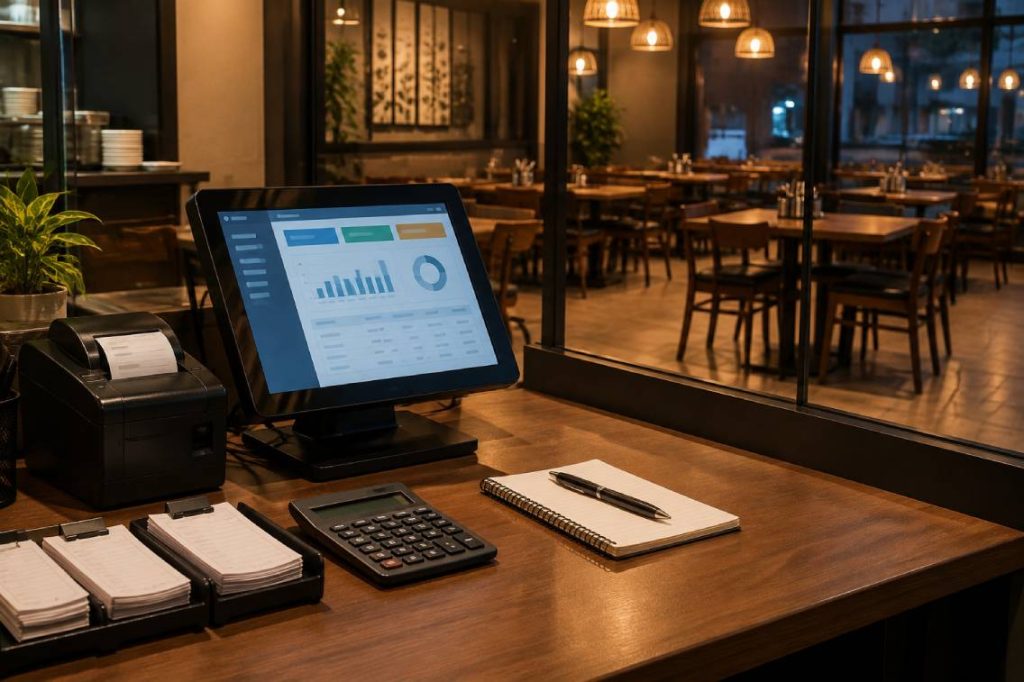
Managing a food and beverage (F&B) business requires more than serving good food. Restaurant owners also need to handle customer orders, payments, inventory, and daily sales while keeping operations running smoothly.
A reliable point-of-sale (POS) system can simplify these responsibilities, helping businesses reduce manual work and improve overall efficiency.
In Malaysia, EPOS and Optimy POS are two solutions that restaurant owners may consider when looking for a suitable management system. Both aim to support F&B operations, but their approaches to restaurant management and business convenience have different areas of emphasis.
This article compares EPOS and Optimy POS from a practical business perspective, helping restaurant owners understand which solution may better suit their daily needs.
EPOS is a point-of-sale solution provider offering digital tools to help Malaysian businesses manage transactions, orders, payments, and business operations.
Through its EPOS360 ecosystem, the company focuses on connecting restaurant sales with payment services, digital ordering, delivery channels, and customer engagement tools.
Its solutions are designed for different F&B environments, including cafés, casual dining outlets, and quick-service restaurants.
For business owners interested in combining restaurant operations with a wider digital sales and payment ecosystem, EPOS provides an option worth exploring.
Optimy POS is a Malaysian F&B point-of-sale solution designed to help restaurants simplify their daily operations through practical and accessible management tools.
The system supports essential activities such as customer ordering, table management, inventory tracking, payment processing, and sales reporting.
Whether running a small café, kopitiam, beverage shop, or established restaurant, business owners can use Optimy POS to organize different operational tasks through one system.
With its focus on affordability, flexible device compatibility, and restaurant management, Optimy POS offers a practical solution for F&B operators looking to improve everyday efficiency.
When comparing EPOS vs Optimy POS, restaurant owners should look beyond the basic ability to process transactions. A suitable POS system should support the way a restaurant operates, from receiving customer orders to reviewing business performance.
Although both systems serve the F&B industry, their broader business approaches are worth understanding.
Efficient order management is important in any F&B establishment, especially during busy lunch and dinner periods.
EPOS provides tools for handling restaurant transactions and different ordering channels. Its digital ecosystem is designed to help businesses manage dine-in, takeaway, and online orders more conveniently.
Optimy POS places emphasis on everyday restaurant workflows, helping staff manage customer orders, tables, and transactions through a centralized system.
For restaurant owners looking to improve coordination between the dining area, cashier, and kitchen, Optimy offers features designed around common F&B operating requirements.
Both systems can support daily restaurant activities. The most suitable choice depends on how your restaurant receives orders and manages customer service.
A smooth payment process can make a meaningful difference to customer satisfaction. Long queues, payment confusion, and manual order handling can slow down restaurant operations.
EPOS emphasizes its digital payment ecosystem, connecting POS functions with payment solutions and other customer-facing services.
Optimy POS also supports different payment methods while allowing restaurant staff to manage transactions, split bills, and organize customer payments more efficiently.
For businesses considering self-ordering options, Optimy also provides QR ordering capabilities that allow customers to place orders using their mobile devices.
Restaurant owners can learn more about how a QR ordering system for restaurants and cafés can improve the ordering experience.
Ultimately, choosing the right system involves understanding which payment and ordering methods are most convenient for your customers and employees.
Restaurant owners need clear visibility over their business performance to make informed decisions.
EPOS offers business management and reporting tools that help merchants monitor sales activities and understand business performance.
Similarly, Optimy POS provides reporting and inventory management capabilities that allow restaurant owners to review transactions, monitor stock, and track daily operations.
These functions are particularly useful for businesses that want to understand sales patterns, manage inventory more effectively, and reduce the time spent on manual recordkeeping.
The key consideration is how easily business owners can access and understand the information needed to manage their restaurants.
Choosing a POS system involves evaluating its overall value rather than focusing only on the initial purchase or subscription cost.
Restaurant owners should consider factors such as hardware compatibility, system usability, operational requirements, installation, and ongoing support.
EPOS offers an integrated approach that may appeal to F&B businesses interested in managing payments, digital sales, and customer engagement within a wider ecosystem.
Optimy POS, meanwhile, is worth considering for restaurant owners looking for a budget-conscious solution that focuses on practical F&B management.
Its flexible device compatibility also gives businesses options when choosing suitable POS hardware for their operations.
Before deciding, restaurant owners can explore the available Optimy POS software plans and pricing to understand their options and estimate their overall investment.
A POS system provides better value when its capabilities match your restaurant’s actual requirements without adding unnecessary complexity or expenses.
Every restaurant operates differently. A quick-service food outlet may prioritize fast transactions, while a full-service restaurant may require better table management and coordination between staff.
EPOS may appeal to businesses that want to connect restaurant transactions with online selling, payment services, and customer engagement tools.
Optimy POS is worth exploring for restaurant owners who prioritize daily operational convenience, straightforward management, and flexible hardware arrangements.
For example, a small café may need a simple system for processing orders and tracking sales, while a larger restaurant may require additional tools to manage tables, employees, and inventory.
Businesses operating in Johor can also explore what to consider when selecting a POS system for restaurants in Johor Bahru, including business requirements and the availability of local assistance.
Rather than choosing a POS system based solely on brand recognition, restaurant owners should assess how well the solution fits their working environment.
If you are exploring an EPOS alternative in Malaysia, Optimy POS offers another approach to managing everyday restaurant operations.
One of its main advantages is its focus on common F&B activities. Restaurant owners can manage ordering, tables, sales, inventory, and other essential processes through one platform.
Optimy POS also offers flexible hardware options, allowing businesses to explore setups that suit their counter space, operating style, and budget.
For smaller establishments, this flexibility can be useful when planning a new outlet or upgrading an existing POS arrangement.
Another consideration is local support. Optimy’s presence in Johor Bahru makes it particularly relevant for F&B businesses in the surrounding area that prefer access to a nearby service provider.
Restaurant owners planning a complete setup can explore the available Optimy POS hardware and software packages to identify a suitable solution.
Whether opening a new café or reviewing an existing restaurant management system, Optimy POS is worth evaluating as a practical alternative.
Both EPOS and Optimy POS offer solutions that can support F&B operations in Malaysia. However, choosing between them depends on your restaurant’s priorities and the type of management approach you prefer.
EPOS is worth considering for businesses interested in a digital ecosystem that combines restaurant transactions, payments, online sales, and customer engagement.
Optimy POS, on the other hand, offers a practical alternative for restaurant owners who value straightforward F&B management, flexible hardware options, and local assistance in Johor Bahru.
The right decision should be based on how well the system supports your restaurant’s daily operations, budget, and future business needs.
If you are looking for an alternative to EPOS, explore Optimy POS and request a demo to discover a suitable solution for your F&B business.
Yes. Optimy POS is an alternative to EPOS for restaurant owners looking for a practical F&B management system. Both offer restaurant-related solutions, but business owners should compare their workflows, preferred hardware, budget, and support needs before choosing.
Optimy POS is designed around everyday restaurant operations, including order processing, table management, inventory monitoring, and sales reporting. These tools help businesses organize routine tasks and manage operations more efficiently.
Yes. Optimy POS supports different types of F&B establishments, including restaurants, cafés, kopitiams, bakeries, and beverage outlets. Businesses can explore suitable configurations based on their operating requirements.
Yes. Optimy POS supports Android, iOS, and Windows platforms, giving restaurant owners flexibility when choosing compatible devices for their business operations.
Yes. Optimy POS provides multi-branch management capabilities that help business owners monitor operations across different locations. This can be useful for growing F&B businesses that require better visibility over their outlets.
Restaurant owners should consider their business size, daily order volume, preferred hardware, and operational requirements. You can visit the Optimy POS website to explore the available solutions and contact the team for a product demonstration.